

The Scalp: Your Hair's Unsung Foundation
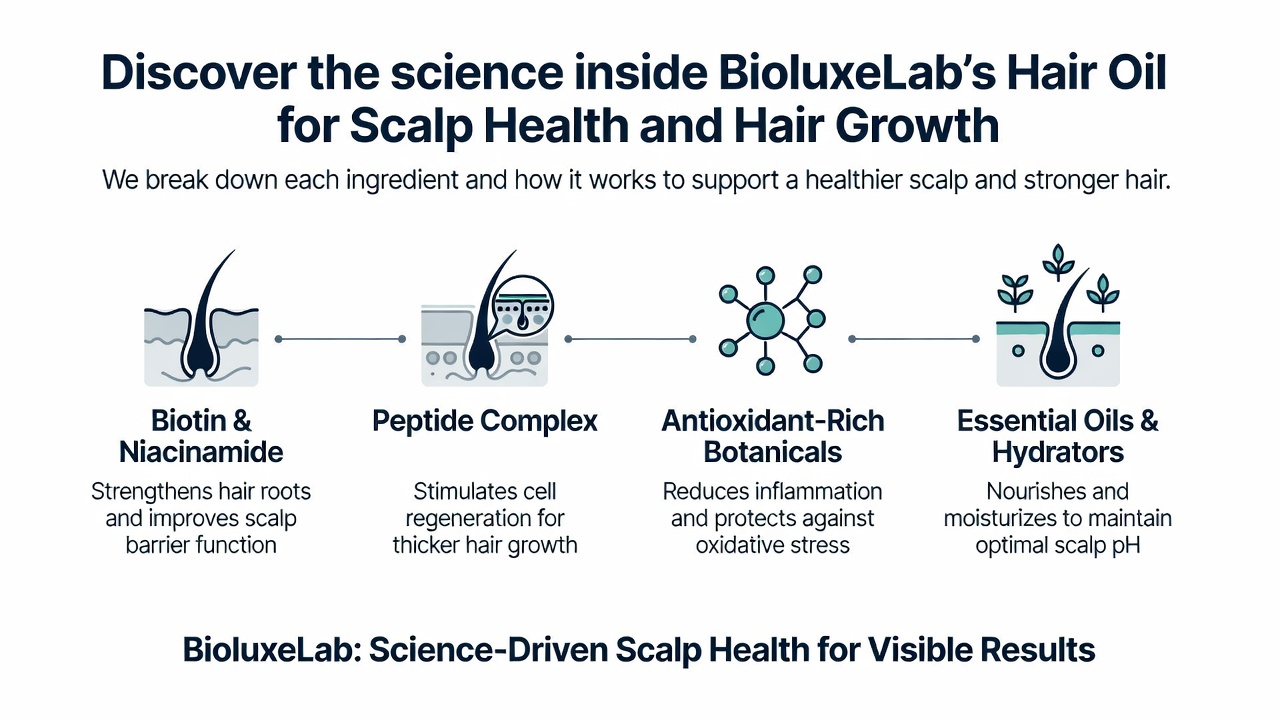
We often focus on the hair itself—its length, shine, and volume. But what if the real story begins beneath the surface? The scalp is a living ecosystem, rich with blood vessels, sebaceous glands, and hair follicles. For many people, maintaining a healthy scalp is the missing piece in their hair care routine. Inside BioluxeLab's Hair Oil for Scalp Health and Hair Growth, you'll find a carefully curated blend of ingredients that work together to support this foundation. Let's take a closer look at what's inside and why it matters.
What Makes a Scalp Healthy?
A healthy scalp is balanced—not too oily, not too dry, and free from irritation or flaking. It has a robust microbiome, good circulation, and minimal oxidative stress. When this balance is disrupted, hair growth can slow down, and hair may become thinner or more brittle. Common culprits include environmental pollutants, harsh styling products, and even stress. The goal of a targeted hair oil is to restore that equilibrium, creating an environment where hair can thrive.
Inside the Bottle: Key Ingredients and Their Roles
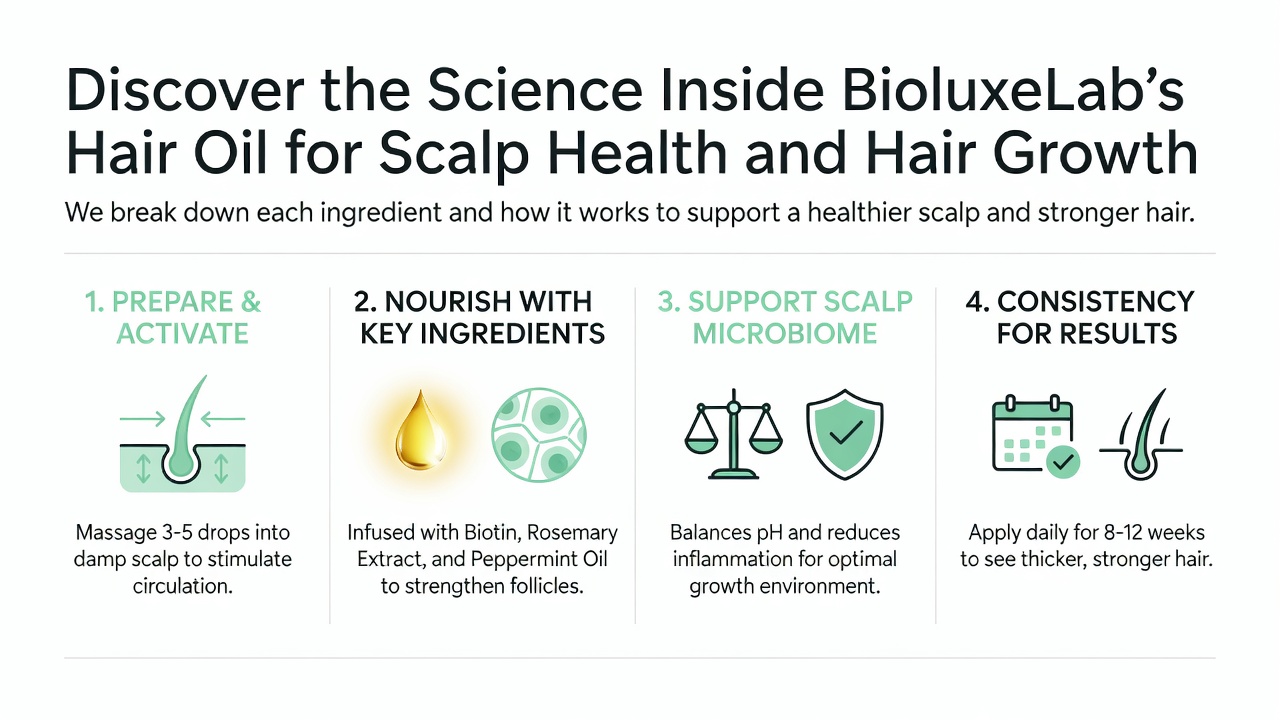
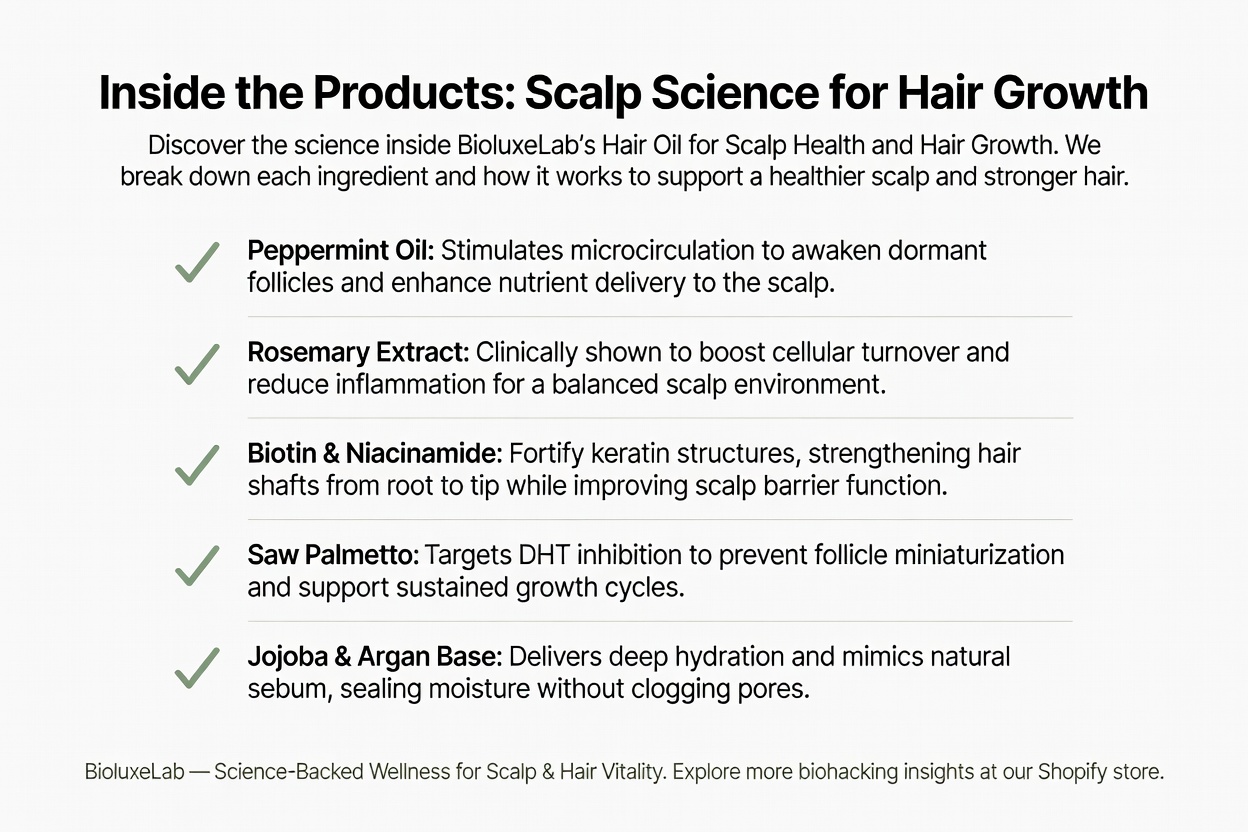
BioluxeLab's formula combines traditional botanical oils with modern skincare actives. This blend is designed to nourish the scalp and support hair growth from the root. Here's a closer look at each component.
### Castor Oil: A Time-Honoured Moisturiser
Castor oil is rich in ricinoleic acid, a fatty acid known for its moisturising and anti-inflammatory properties. It can help soften the scalp and reduce dryness, which may improve the overall health of the hair follicle. While not a miracle cure, it has been used for centuries in hair care routines for good reason.
### Jasmine Oil: More Than a Fragrance
Jasmine oil is often praised for its calming scent, but it also offers potential benefits for the scalp. Some research suggests it may help reduce stress-related hair loss by promoting relaxation. Additionally, its antimicrobial properties can support a balanced scalp microbiome. For many, the aromatic experience alone can make the oil a pleasure to use.
### Rosemary Oil: The Growth Ally
Rosemary oil is one of the most studied natural oils for hair growth. A 2015 study compared rosemary oil to minoxidil, a common hair growth treatment, and found it produced similar results in terms of hair count after six months. It's believed to work by improving circulation to the scalp and reducing inflammation. This makes it a valuable addition to any hair oil formulation.
### Vitamin A (Retinol): The Cell Turnover Agent
Retinol is well-known in skincare for encouraging cell turnover. When applied to the scalp, it can help unclog hair follicles and promote a healthier environment for new hair growth. However, it should be used in moderation, as too much can cause irritation. In this oil, it's included at a balanced level to support scalp health without overstimulation.
### Vitamin C: The Protector
Vitamin C is a powerful antioxidant that helps protect scalp cells from oxidative stress caused by free radicals. It also plays a role in collagen production, which is essential for the structure of hair follicles. By shielding the scalp from environmental damage, vitamin C can help maintain a healthy foundation for hair growth.
### Vitamin E: The Moisture Lock
Vitamin E is another antioxidant that helps reduce oxidative stress and supports skin health. It also has moisturising properties, which can prevent the scalp from becoming dry and flaky. Combined with the other oils, it helps keep the scalp supple and nourished.
### Niacinamide: The Emerging Star
Niacinamide, a form of vitamin B3, has gained popularity in skincare for its ability to soothe inflammation and strengthen the skin barrier. Recent studies suggest it may also benefit the scalp. One study found that niacinamide can prevent oxidative stress in hair follicles, which may in turn promote hair growth. This ingredient is a relatively new addition to hair care, but the early evidence is promising.
How These Ingredients Work Together
Each ingredient in this oil plays a specific role, but their real power lies in synergy. The botanical oils provide a base that delivers the vitamins deeper into the scalp. Castor and jasmine oils offer immediate moisture and calming effects, while rosemary oil stimulates circulation. Meanwhile, the vitamins work at a cellular level to protect and repair. The result is a multi-pronged approach to scalp health that goes beyond what any single ingredient could achieve alone.
A Simple Routine for Scalp Care
Using a hair oil effectively doesn't have to be complicated. Here's a straightforward routine that many people find helpful:
- **Step 1**: Start with a small amount—about a dropperful or less. Warm it between your fingertips.
- **Step 2**: Part your hair into sections and apply the oil directly to your scalp, using gentle circular motions. Focus on areas that feel dry or where you notice thinning.
- **Step 3**: Leave the oil on for at least 30 minutes, or longer if you prefer. Some people like to apply it before bed and wash it out in the morning.
- **Step 4**: Wash your hair with a gentle shampoo to remove the oil. You may need to shampoo twice, especially if you have fine hair.
- **Step 5**: Repeat 2–3 times per week for consistent results.
Consistency is key. Like any wellness practice, it takes time to see changes. Many people notice improvements in scalp condition and hair texture after a few weeks of regular use.
What to Expect: Realistic Outcomes
It's important to approach hair growth with realistic expectations. No product can guarantee dramatic results for everyone. Hair growth cycles are complex and influenced by genetics, hormones, diet, and stress levels. A nourishing scalp oil can support the process, but it's not a standalone solution. For many, combining this oil with a balanced diet, adequate sleep, and stress management may yield the best outcomes.
Common Mistakes to Avoid
- **Using too much oil**: Less is more. Overloading the scalp can lead to greasiness and clogged pores.
- **Skipping the massage**: The application technique matters. Gentle massage helps stimulate blood flow and ensures even distribution.
- **Expecting overnight results**: Hair grows slowly—about half an inch per month on average. Give the product at least two to three months to see noticeable changes.
- **Neglecting the rest of your routine**: A healthy scalp is part of a bigger picture. Diet, hydration, and gentle hair care all play a role.
Why Ingredients Matter: A Final Thought
The beauty of products like this hair oil is that they invite us to look closer at what we put on our bodies. Every ingredient has a story and a purpose. By understanding what's inside, we can make more informed choices for our health. This oil isn't a quick fix—it's a thoughtful blend designed to support a fundamental part of your well-being. And that's a perspective worth holding onto.
References
- Panahi, Y., et al. (2015). Rosemary oil vs minoxidil 2% for the treatment of androgenetic alopecia: a randomized comparative trial. *Skinmed*, 13(1), 15-21.
- Trueb, R. M. (2019). Oxidative stress in ageing of hair. *International Journal of Trichology*, 11(6), 247-254.
- Zouboulis, C. C., et al. (2021). Niacinamide: a multifaceted molecule for skin and hair health. *Dermatology and Therapy*, 11(4), 1107-1122.
*This article is for informational purposes only and does not constitute medical advice. Always consult a healthcare professional before starting a new hair care regimen.*
Shop Hair Oil for Scalp Health and Hair Growth
Related reading & products
0 comments