

The Truth About What's Inside Your Supplement Bottle
You've probably seen the tubs of white powder stacked on gym shelves or promoted by fitness influencers. Creatine monohydrate is one of the most researched supplements in the world, yet many people still wonder: what exactly is inside that scoop? Is it just a simple compound, or is there more nuance to the ingredient than we realise?
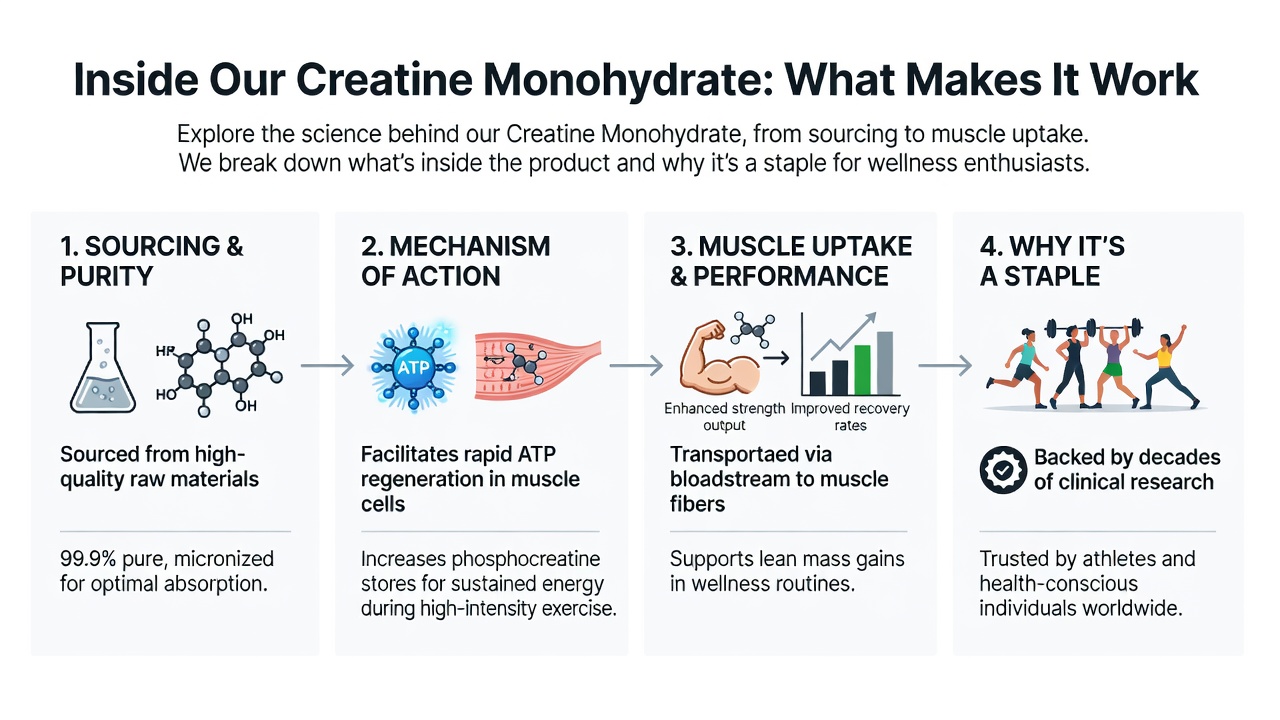
For wellness enthusiasts who care about what goes into their bodies, understanding the product itself is essential. This isn't about magic formulas or overhyped promises. It's about looking at the science, the source, and the practical role of creatine monohydrate in your daily routine. In this article, we're going inside the product to see what makes it tick.
A Brief History of Creatine in Sports and Wellness
Creatine isn't a new discovery. Researchers identified it in the 1830s, and by the early 20th century, scientists understood that it plays a role in muscle contraction. But it wasn't until the 1990s that creatine monohydrate became widely popular among athletes. Since then, thousands of studies have examined its effects on strength, power, and recovery.
Today, creatine monohydrate is used not only by bodybuilders but also by older adults looking to maintain muscle mass, vegetarians seeking to support their energy systems, and even some people interested in cognitive health. The reason for this broad appeal lies in the way creatine works at a cellular level.
What Creatine Monohydrate Actually Is
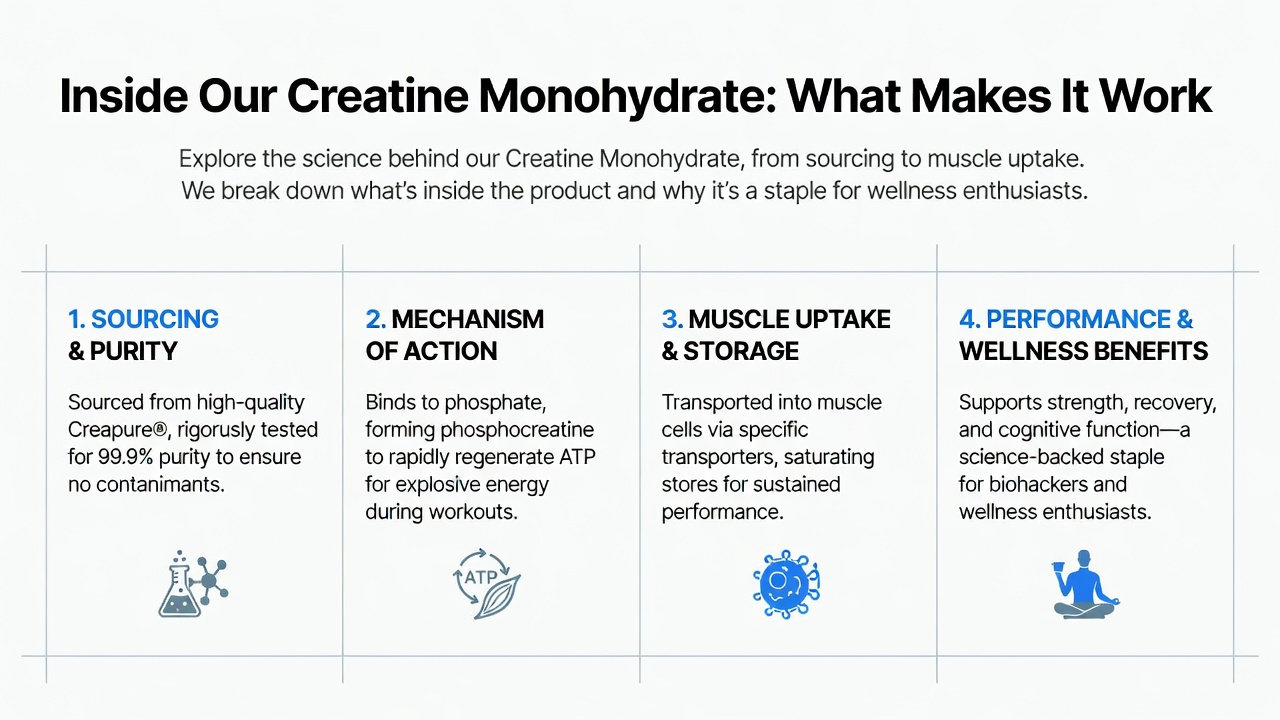
At its core, creatine monohydrate is a molecule made from three amino acids: arginine, glycine, and methionine. Your body produces small amounts of this compound, mainly in the liver and kidneys. It's then transported through the bloodstream to skeletal muscles, where it's stored as phosphocreatine.
Phosphocreatine acts as a rapid reserve for regenerating ATP, the primary energy currency of cells. When you perform high-intensity activities — like lifting weights, sprinting, or even a demanding yoga flow — your muscles burn through ATP quickly. Creatine helps replenish that supply, allowing you to maintain performance for a few extra reps or seconds.
But here's the key point: the amount of creatine shown in clinical research to support exercise performance and muscle protein synthesis is significantly larger than what your body can produce or what you can get from diet alone. That's where supplementation becomes relevant.
Inside the Product: What's in Our Creatine Monohydrate
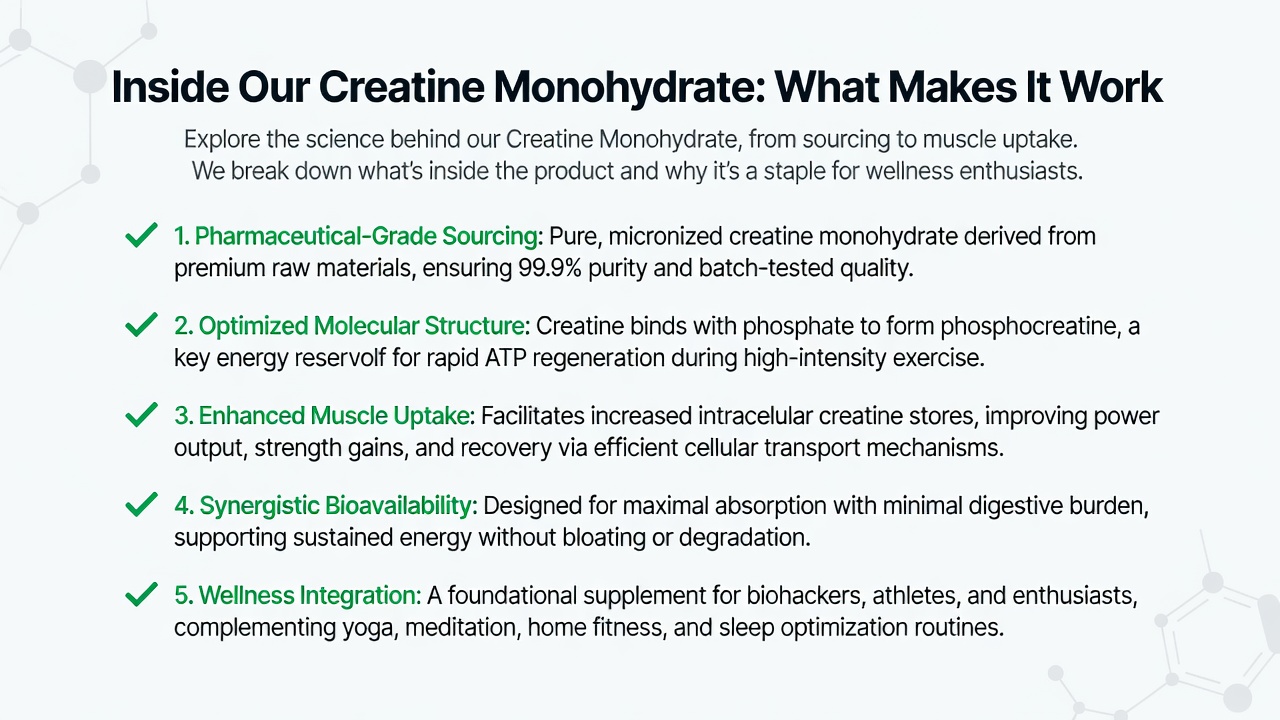
Let's open the metaphorical bottle. Our creatine monohydrate contains one ingredient: creatine monohydrate. It's unflavoured, which means no artificial sweeteners, no fillers, and no unnecessary additives. The product is manufactured in the USA, with a focus on purity and consistency.
When we talk about what's inside, we're not just listing ingredients. We're considering the sourcing, the particle size, and the manufacturing process. For many users, the absence of extra components is a feature, not a limitation. It means you can add it to your morning smoothie, post-workout shake, or even water without worrying about hidden compounds.
### Why Unflavoured Matters
Flavoured supplements often contain dextrose, maltodextrin, or artificial flavours. While these aren't inherently harmful, they can add unnecessary sugars or chemicals to your routine. An unflavoured product gives you control over what you consume. You decide how to mix it, and you avoid ingredients that might not align with your wellness goals.
### The Manufacturing Standard
Manufacturing in the USA often implies adherence to strict quality controls. For many consumers, this adds a layer of trust. The product is produced in facilities that follow Good Manufacturing Practices (GMP), which means each batch is tested for purity and potency. This doesn't guarantee perfection, but it does reduce the risk of contaminants or inaccurate labelling.
How Your Body Uses Creatine: A Step-by-Step Look
Understanding what's inside the product is one thing. Understanding how it works inside your body is another. Let's trace the journey of a scoop of creatine monohydrate.
1. **Absorption**: When you ingest creatine monohydrate, it enters your digestive system. Most of it is absorbed into the bloodstream through the small intestine. This process is generally efficient, though some people may experience minor digestive discomfort if they take too much at once.
2. **Transport**: Once in the blood, creatine travels to your muscles. Muscle cells have specific transporters that pull creatine from the bloodstream and store it. Over time, with consistent supplementation, your muscle creatine levels can increase by 20 to 40 percent.
3. **Storage**: Inside the muscle, creatine is converted into phosphocreatine. This stored form acts as a backup battery for ATP production. When you exercise, your muscles dip into this reserve to keep going.
4. **Performance Support**: With higher creatine stores, you may be able to train harder and longer. This can lead to greater gains in strength and muscle mass over weeks and months. It's not a shortcut, but it can help you get more out of your workouts.
Common Questions About Creatine Monohydrate
### Does It Cause Water Retention?
For many people, yes. Creatine draws water into muscle cells, which can cause a slight increase in body weight. This isn't the same as bloating or fat gain. It's intracellular water, meaning it's stored inside your muscles, which can actually make them look fuller.
### Do I Need to Cycle Creatine?
Research suggests that cycling is not necessary. You can take creatine monohydrate continuously at a maintenance dose of 3 to 5 grams per day. Some people choose a loading phase (20 grams per day for a week) to saturate muscles faster, but this is optional and may cause digestive upset.
### Is Creatine Only for Men?
Absolutely not. Women can benefit from creatine supplementation as well. Studies show that it can support strength, power, and recovery in female athletes. It may also play a role in bone health and cognitive function as we age.
A Comparison: Creatine Monohydrate vs. Other Forms
You may come across other types of creatine on the market, such as creatine ethyl ester, creatine hydrochloride, or buffered creatine. Marketers often claim these forms are better absorbed or cause fewer side effects. However, the majority of research still supports creatine monohydrate as the most effective and well-studied form.
| Form | Absorption | Research Support | Cost |
|------|------------|------------------|------|
| Creatine Monohydrate | High | Extensive | Low |
| Creatine Ethyl Ester | Lower | Limited | Higher |
| Creatine Hydrochloride | Mixed | Moderate | Higher |
| Buffered Creatine | Similar | Limited | Higher |
For most people, creatine monohydrate offers the best balance of affordability, efficacy, and safety. The other forms may have niche advantages, but they often come with a higher price tag and less evidence.
Mistakes to Avoid When Using Creatine
Even with a simple product like creatine monohydrate, there are common pitfalls. Here are a few to watch out for:
- **Taking too much at once**: Your body can only absorb so much creatine at a time. Large doses may cause stomach cramps or diarrhoea. Stick to 3-5 grams per day.
- **Not drinking enough water**: Creatine pulls water into your muscles. If you don't stay hydrated, you may feel dehydrated or experience muscle cramps.
- **Expecting instant results**: Creatine works gradually. It takes weeks to fully saturate your muscles. Don't expect a dramatic change after one dose.
- **Buying based on hype**: Some brands add 'proprietary blends' or fancy marketing. Stick with products that clearly list their ingredients and have third-party testing.
A Sample Routine for Integrating Creatine
If you're new to creatine, here's a simple way to incorporate it into your day:
- **Morning**: Mix 3 to 5 grams of unflavoured creatine monohydrate into your coffee, tea, or water. It dissolves best in warm liquids.
- **Post-workout**: Add it to your protein shake or recovery drink. Some research suggests that taking creatine with carbohydrates may enhance uptake.
- **Consistency**: Take it daily, even on rest days. This helps maintain elevated muscle creatine levels.
Remember, creatine is not a substitute for hard work. It's a tool that can support your efforts when used alongside a balanced diet and regular exercise.
The Role of Creatine in Wellness Beyond the Gym
While creatine is often associated with weightlifting, its potential benefits extend to other areas. For instance, some studies suggest that creatine may support cognitive function, particularly in tasks that require short-term memory or quick thinking. This could be relevant for people who experience mental fatigue or those following a plant-based diet, which tends to be lower in creatine.
Additionally, creatine may play a role in healthy ageing. As we get older, muscle mass naturally declines. Creatine supplementation, combined with resistance training, may help slow this process and maintain mobility.
What the Research Says
Over 700 studies have examined creatine monohydrate. The consensus is clear: it's safe for most people when taken at recommended doses. Long-term studies have not found significant adverse effects in healthy individuals. However, if you have pre-existing kidney issues, it's wise to consult a healthcare professional before starting any new supplement.
The International Society of Sports Nutrition (ISSN) states that creatine monohydrate is the most effective ergogenic aid currently available for increasing high-intensity exercise capacity and lean body mass. That's a strong endorsement from a respected organisation.
Why Transparency Matters for Your Wellness Choices
In a market filled with flashy labels and exaggerated claims, knowing what's inside your supplement bottle gives you power. When you choose a product with a single, well-researched ingredient, you eliminate guesswork. You know exactly what you're putting into your body.
Our creatine monohydrate is designed with this transparency in mind. It's not about gimmicks. It's about providing a pure, effective compound that has stood the test of time. Whether you're a seasoned athlete or someone just starting their wellness journey, understanding the product helps you make informed decisions.
Final Thoughts
Creatine monohydrate is one of those rare supplements that lives up to its reputation. By looking inside the product — at the ingredient, the source, and the science — you can see why it remains a staple for so many people. It's simple, effective, and backed by decades of research.
If you're considering adding it to your routine, start with a standard dose, stay consistent, and pay attention to how your body responds. And remember, the best supplement is the one that fits your goals and your lifestyle.
Explore our Creatine Monohydrate and see for yourself what's inside. Your muscles — and your peace of mind — may thank you.
Related reading & products
0 comments