

The Body’s Own Creatine: A Tiny Factory with Big Demands
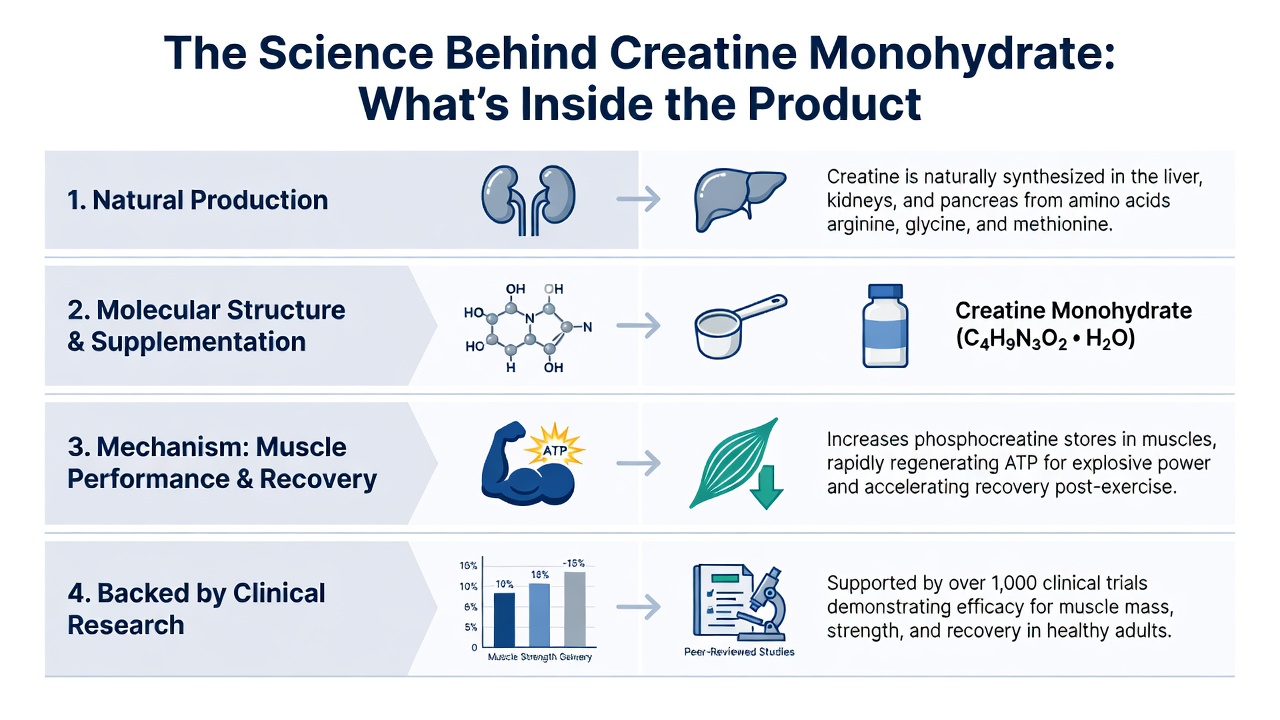
Your body is a remarkable chemical plant. Every day, your liver and kidneys quietly produce small amounts of creatine, a compound that fuels your skeletal muscles during high-intensity activity. But here’s the catch: the quantity the body makes naturally is far below what clinical research suggests is needed to truly support exercise performance, muscle protein synthesis, and related processes. This gap between natural production and optimal levels is where supplementation steps in. Let’s open up the product and examine what’s really inside creatine monohydrate.
What Creatine Monohydrate Actually Is
At its core, creatine monohydrate is a simple molecule: creatine bound with a water molecule. It’s the most studied and widely used form of creatine in sports nutrition. Unlike some blends or proprietary formulas, this product contains only one ingredient: pure creatine monohydrate, unflavored and manufactured in the USA. No fillers, no artificial flavors, no unnecessary extras. For many people, this simplicity is a major advantage—you know exactly what you’re putting into your body.
How Creatine Works Inside Your Muscles
### The Energy Currency: ATP and Phosphocreatine
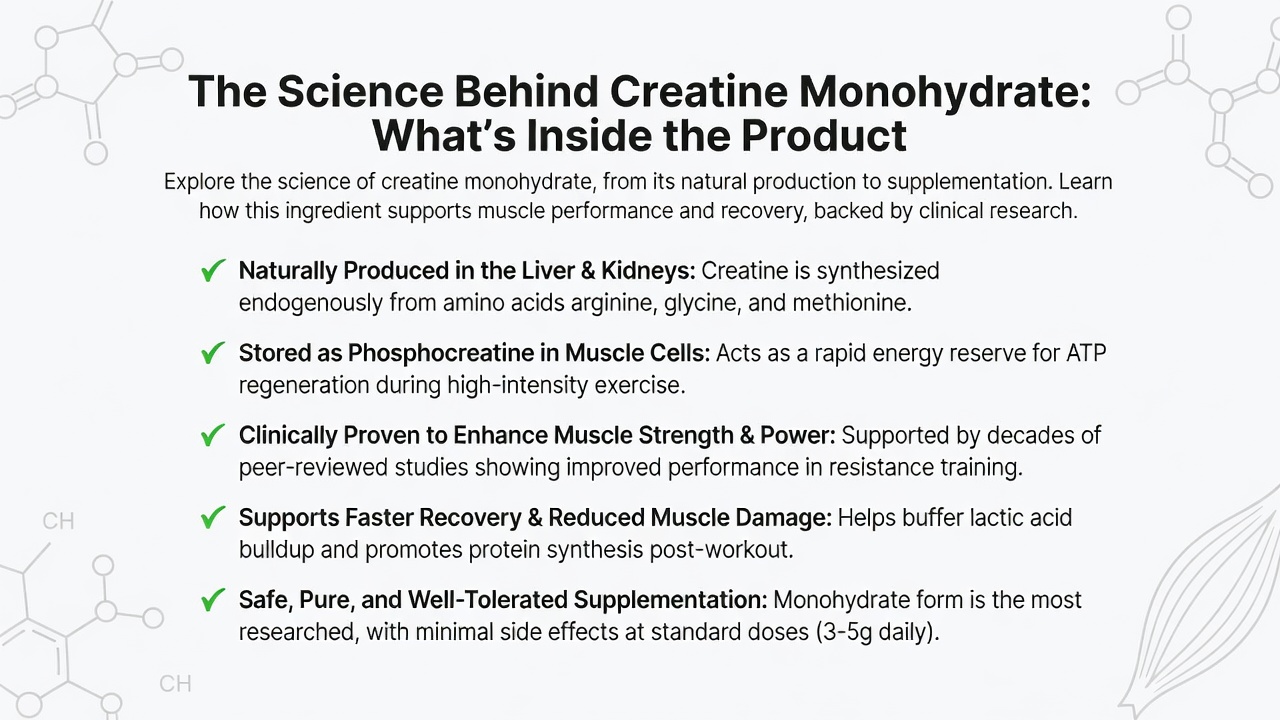
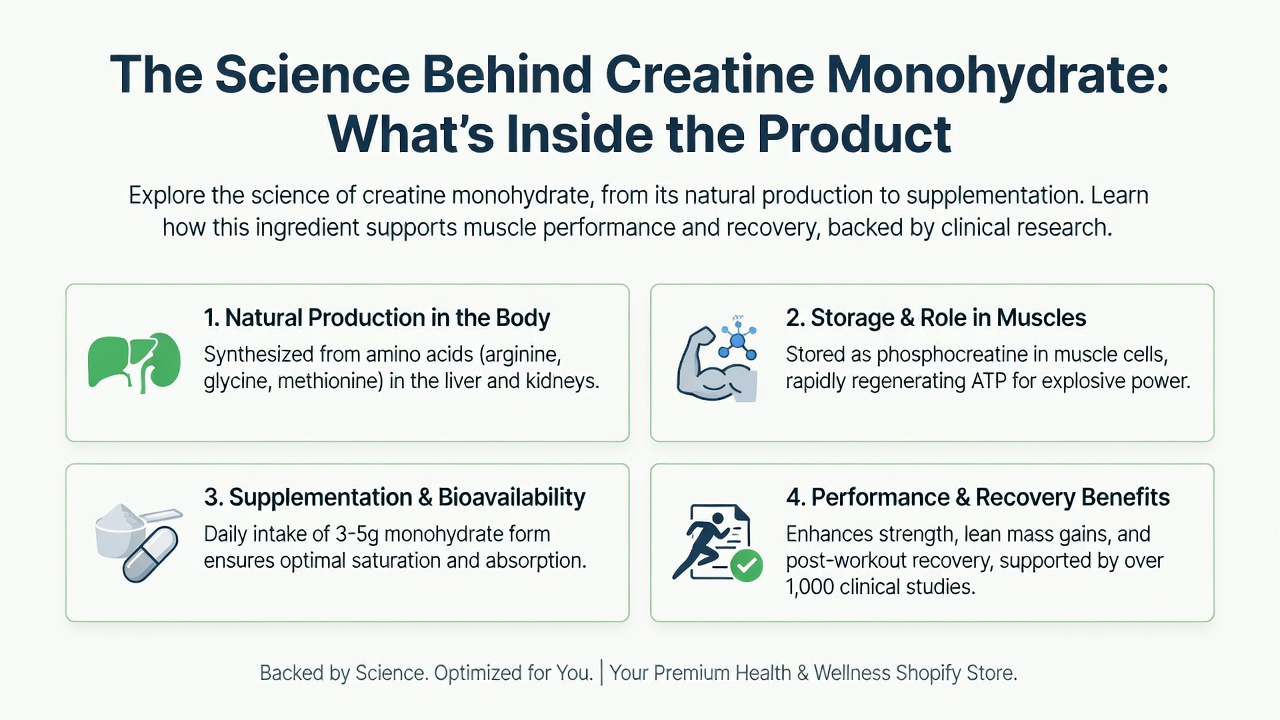
Your muscles rely on adenosine triphosphate (ATP) for energy during short bursts of effort, like lifting a weight or sprinting. ATP gets broken down quickly, and creatine helps regenerate it. Inside muscle cells, creatine is stored as phosphocreatine, which donates a phosphate group to ADP (adenosine diphosphate) to form ATP again. This cycle allows you to sustain high-intensity performance for a few extra reps or seconds. Supplementing with creatine monohydrate increases your muscle’s phosphocreatine stores, giving you more energy on demand.
### Beyond Energy: Muscle Protein Synthesis
Creatine doesn’t just fuel performance; it also signals your muscles to grow. Research indicates that creatine can enhance muscle protein synthesis, the process by which your body repairs and builds new muscle tissue after exercise. This happens partly through cell hydration—creatine draws water into muscle cells, creating a volumizing effect that may trigger anabolic pathways. For many people, this translates to greater strength gains and improved recovery over time.
A Closer Look at the Ingredients
The product label lists only one ingredient: creatine monohydrate. But what does that mean in practice? The creatine used here is sourced and manufactured in the USA, adhering to quality standards. Being unflavored makes it versatile—you can mix it into water, juice, or a smoothie without altering the taste. There’s no micronized version or added buffers; it’s the straightforward form that has been used in thousands of studies. This simplicity is a deliberate choice, focusing on what works rather than marketing gimmicks.
Common Mistakes When Supplementing
Mistake #1: Skipping the Loading Phase
Some people start with a low dose and expect immediate results. While a maintenance dose (3–5 grams daily) works, a loading phase of 20 grams per day for 5–7 days can saturate muscles faster. However, this isn’t necessary for everyone—consistent daily intake will eventually reach similar levels.
Mistake #2: Not Staying Hydrated
Creatine pulls water into muscles, which can increase your overall fluid needs. For many people, this means drinking extra water to avoid dehydration or cramping. Listen to your body and adjust accordingly.
Mistake #3: Expecting Instant Transformation
Creatine is not a magic pill. It supports performance and recovery, but it works best alongside regular resistance training and a balanced diet. Results often become noticeable after a few weeks of consistent use.
A Simple Routine for Integrating Creatine
If you’re new to creatine, here’s a straightforward approach:
- **Start with a loading phase (optional):** Take 5 grams four times daily for 5–7 days. This quickly saturates your muscles.
- **Switch to maintenance:** After loading, take 3–5 grams once daily. This keeps levels elevated.
- **Timing:** Take it post-workout with a carbohydrate-containing drink to enhance uptake, though any time of day works.
- **Consistency is key:** Skipping days reduces effectiveness. Make it a daily habit.
Comparing Creatine Monohydrate to Other Forms
There are many creatine variants on the market: creatine ethyl ester, buffered creatine, and creatine hydrochloride. Most claim better absorption or fewer side effects. However, extensive research shows that creatine monohydrate remains the gold standard. It’s the most studied, most affordable, and consistently effective. For many people, the simpler option is also the smarter one.
The Science of Safety and Quality
Over decades of research, creatine monohydrate has shown a strong safety profile when used at recommended doses. The product’s unflavored, single-ingredient formulation reduces the risk of additives or contaminants. Manufactured in the USA, it follows regulatory guidelines for supplements. As with any supplement, it’s wise to consult a healthcare professional before starting, especially if you have pre-existing conditions.
What This Means for Your Wellness Journey
Creatine monohydrate isn’t just for bodybuilders. It can benefit anyone looking to improve exercise performance, support muscle maintenance as they age, or enhance recovery from workouts. The science behind it is solid, and the product itself is straightforward. By understanding what’s inside, you can make an informed choice about whether it fits into your routine.
Final Thoughts: Inside the Product, Outside the Hype
When you look inside a product like this, you find something refreshing: clarity. One ingredient, backed by decades of research, without unnecessary complexity. For many people, that’s exactly what effective supplementation looks like. Whether you’re a seasoned athlete or just starting your fitness journey, creatine monohydrate offers a simple, evidence-based tool to support your goals.
Related reading & products
0 comments